emeeqo Blog
Raising teenagers is hard.
We write about what actually helps.
Evidence-based insights for parents, teens and families navigating the most intense years — grounded in REBT and real Indian family life.

For Teens
Your Friend Didn't Get the Rank. This Is for You.
You saw their number before you knew what to do with it. The group chat has gone very quiet — or very loud. This is a guide for the friend who wants to show up but doesn't know how.
August 2026 · 4 min readRead article →
For Parents
He Won't Let His Son Cycle. He Won't Let His Wife Ride Either.
The car for a one-kilometre trip. No football, because of the company. He is not a careless father. Then you meet his wife, who captained a basketball team and owns a motorcycle she is not allowed to ride.

For Parents
What Seven Years of NEET Prep Actually Takes From a Child
The plan starts in Class 5 and runs until the boards are done. What gets discussed is the syllabus and the fees. What nobody costs out is everything the child quietly stops doing.

For Parents
Relational Intelligence: The Parenting Skill No One Named
EQ taught us to read the person. Relational intelligence teaches us to read the system — the trust, the silence, the invisible hierarchy of a teenager's world. Many Indian parents already know how to do this. They just never called it that.

Product & Vision
Beyond Motivation: Why Parenting Needs Practice, Not Just Inspiration
More parenting books, podcasts and seminars than ever — and families have never felt more disconnected. Because inspiration was never the problem. A spark can start a fire. It cannot keep it burning.

For Parents
The Career Question That Is Breaking Indian Families — And a Better Way to Ask It
80% of Indian parents still push STEM. Over 10 lakh teens didn't clear NEET in 2025. The career conversation is not broken because of bad options — it is broken because of what is not being said.

For Parents
Emotion Coaching: The 5-Step Method That Raises Emotionally Intelligent Teenagers
Gottman tracked children from age 3 to 15. The single biggest predictor of their resilience and peer relationships wasn't IQ or parenting style — it was whether their parents were emotion coaches.

Gen Alpha
75% of 8-Year-Olds Are Already Thinking About Mental Health. What Does That Tell Us?
A Springtide Research Institute study found three in four Gen Alpha children aged 8–10 are already thinking about mental health. Awareness arrived early. The tools haven't caught up.

Gen Alpha
Gen Alpha Wants to Build Businesses. Nobody Is Teaching Them How to Handle Rejection.
76% of Gen Alpha aspire to be their own boss. But entrepreneurship runs on rejection tolerance and emotional regulation — skills that are not on any curriculum.

Gen Beta
Gen Beta Will Grow Up With AI as a Best Friend. Here's What That Changes — and What It Can't Replace.
McCrindle Research describes Gen Beta's relationship with AI as 'cognitive partnership'. Here's what that means for emotional development — and what remains irreplaceable.

Gen Alpha
The Skill That Will Define Generation Alpha — and Schools Are Barely Teaching It
Coding, STEM, and academic results are the focus of every Gen Alpha curriculum. But research on what will matter in their working lives points somewhere else entirely.

Gen Beta
Generation Beta Is Being Born Into a World of Overlapping Crises. Here's What Resilience Actually Looks Like.
Researchers call it a polycrisis — multiple large problems compounding simultaneously. The old model of 'toughen up' was never adequate. For Gen Beta, it will be counterproductive.

For Parents
Helicopter Parenting: When Your Love Starts to Hold Them Back
Helicopter parenting feels like responsible love — but research shows it quietly builds anxiety and low resilience in teenagers. Here's what's really happening, and what to do instead.
For Parents
10 Signs You Are Overparenting Your Teenager — and Simple Fixes
Overparenting is easy to miss because it looks like love. Here are 10 specific signs you might be doing too much — and what small changes actually help.
For Parents
Emotional Regulation for Teenagers: What US and UK Research Has Found
Yale's RULER, Gottman Emotion Coaching, DBT for adolescents, and the UK's MindEd framework — four evidence-based methods that build emotional intelligence in teenagers, explained for parents.
Family & Culture
Swiss Parenting: How Switzerland Raises Remarkably Independent Children
In Switzerland, 6-year-olds walk to school alone. Teenagers manage their own schedules. This is not carelessness — it's one of the most deliberate parenting philosophies in the world.

Family & Culture
Scandinavian Parenting: Why Nordic Kids Are the World's Happiest
Denmark, Finland, and Sweden top every child happiness ranking. The reasons are mostly about how parents raise their children — not money or technology.

Family & Culture
The Israeli Way: Raising Resilient, Confident Kids
Israel's parenting culture is built around chutzpah, community, and resilience. Here's what makes it distinctive — and what Indian parents can take from it.

For Parents
Signs of Depression in Teenagers — What Parents Need to Know
Depression in teenagers often looks different from adult depression — it can appear as anger, irritability or withdrawal. Here's what to watch for and how to respond.
For Parents
Why Teenagers Lie to Their Parents — and What Actually Helps
Most teenage lying isn't deception — it's about autonomy and fear of consequences. Here's what the research says and what parents can do differently.

For Parents
My Teenager's Mood Swings Are Destroying Our Home — What's Actually Going On
Teenage mood swings are developmentally normal, not a character flaw. Here's the neuroscience behind them and what to do when they feel unbearable.

For Parents
Teen Peer Pressure — How to Help Without Pushing Your Teenager Away
Peer pressure in adolescence is more nuanced than 'bad friends'. Here's why teenagers are wired to care about peers, and how parents can actually help.

For Parents
My Teenager Won't Listen to a Word I Say — What's Really Going On
When a teenager stops listening, it's rarely defiance. Here's the developmental psychology behind it and the communication shifts that actually work.

For Parents
Teen Low Self-Esteem — The Signs Parents Miss and How to Help
Low self-esteem in teenagers rarely looks like visible sadness. Here's how it actually presents, the habits that quietly build it, and what to avoid.

For Parents
My Teen Is Always on Their Phone — What the Research Says and What to Do
Before the fight about screen time, it's worth asking what your teenager is actually getting from their phone. The answer changes the conversation.

For Parents
My Teenager Is Not Eating — Teen Eating Problems and When to Worry
Teen eating changes are common — but some signal something deeper. Here's how to tell the difference and what to do without making it worse.

For Parents
5 Gentle Questions to Open Their Heart Tonight
Not every child needs advice. Sometimes they just need a safe place to be heard. These five questions create exactly that space — without pressure or agenda.

For Parents
How to Connect With Your Teenager When They Keep Shutting You Out
Connection with a teenager isn't built in long serious talks — it's built in small moments. Here's what research says about rebuilding closeness.
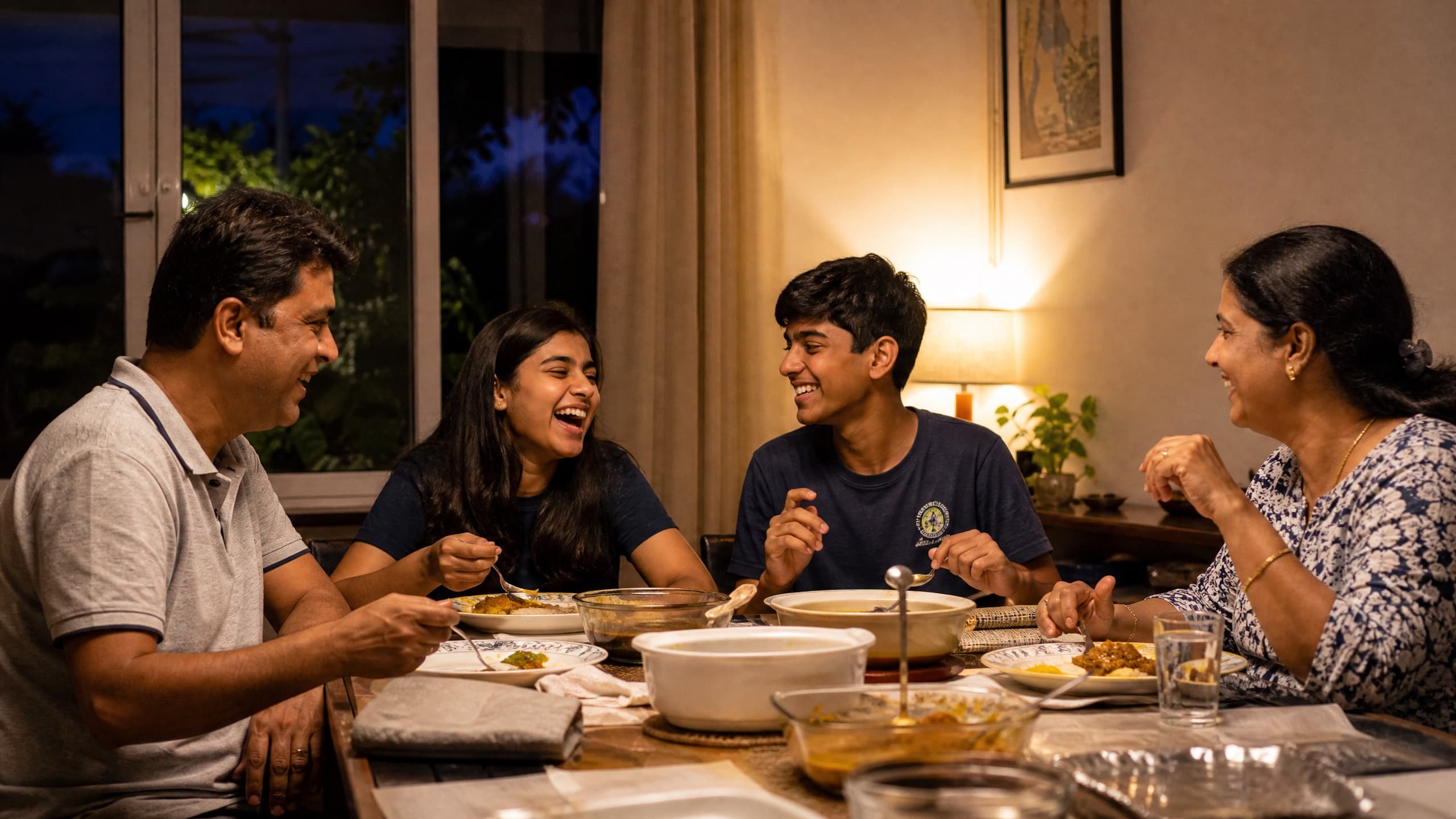
For Parents
How to Teach Your Teenager Emotional Intelligence — A Practical Guide
EQ is a set of learnable skills, not a fixed personality trait. Here's what emotional intelligence means for teenagers and how parents can build it.
For Parents
My Teenager Has Anxiety — What Parents Need to Know and Do
Anxiety in teenagers presents differently from adult anxiety. Here's how it shows up, what helps, and the most important things to avoid doing.

For Parents
My Teenager Is Being Bullied — What Parents Should Do and Avoid
Most parental instincts around bullying make it worse. Here's what actually helps — and why listening comes long before fixing.

For Parents
How to Set Boundaries With Your Teenager — Without the Constant Battles
Boundaries fail when imposed without rationale or input. Here's what the research says about limits teenagers actually respect.

For Parents
How to Help Your Teen With Exam Stress — Without Making It Worse
JEE, NEET, boards — the pressure is real. Here's what genuinely helps, what makes it worse, and when stress becomes a professional concern.

For Parents
How to Motivate a Teenager Who Has Completely Given Up
Labelling a teenager as lazy almost always misses the real cause. Here's what research says about adolescent motivation and the interventions that work.

For Parents
My Teen Won't Talk to Me Anymore — What Parents Can Do
When your teenager goes quiet, silence usually isn't rejection — it's emotional overload. Here's what research says and the low-pressure approaches that work.

For Teens
Why the Same Thing Ruins Your Day… but Not Someone Else's
Same class. Same test. One person walks out fine — you walk out like everything collapsed. Here's the one thing most people miss about how emotions actually work.

Product & Vision
The name emeeqo — and what it actually stands for
Where the name comes from, why it was shaped the way it was, and how AI is helping us turn the signals families share into something genuinely useful.
For Parents
Screen Time Rules for Teenagers That Actually Work
Blanket bans on screen time backfire. Here's what research-backed limits look like and how to set them without constant conflict.

For Parents
My Teenager Has No Friends — Teen Friendship Problems and What Parents Can Do
Social connection is as important for teenagers as nutrition. Here's what friendship difficulties really signal and how parents can help without overstepping.

For Parents
When to Seek Professional Help for Your Teenager — A Clear Guide
Most parents wait too long. Here's a clear guide on which signs mean 'watch and support', which mean 'get help now', and who to contact in India.
For Parents
I Keep Yelling at My Teenager — How to Break the Cycle
Yelling escalates what it's trying to stop. Here's what's happening neurologically when you lose it, and the practical steps to break the pattern.

For Parents
My Teenager Has Anger Issues — Teen Anger Management for Parents
Teenage anger that scares parents is usually hurt, fear, or overwhelm looking for somewhere to go. Here's how to help without making it worse.
Family
The Reset Day: One Intentional Day That Repairs What Weeks of Conflict Erode
There's a point in family life where the atmosphere gets heavy and nobody knows how to lift it. The Reset Day is a structured way back in.

For Teens
Why Drama Workshops Build More Emotional Intelligence Than Lectures Ever Could
Playing a character who handles conflict differently than you do is one of the fastest ways to develop a wider emotional repertoire. Here's the research behind it.

For Parents
Why Are Teenagers So Emotional? — The Science Behind the Drama
Intense teenage emotions aren't immaturity — they're neuroscience. Here's what's happening in the adolescent brain and how that changes what helps.
For Parents
Teen Social Media Anxiety — How Platforms Are Wiring Your Teen's Fears
Social media anxiety in teenagers is distinct from general anxiety. Here's how platforms create it, and what parents and teens can actually do.
For Parents
How to Talk to Your Teenager About Mental Health Without Shutting Them Down
Most mental health conversations with teenagers fail before they start. Here's what research says about opening rather than closing these conversations.
Family
The No-Phone Picnic: Why Boredom Might Be the Missing Ingredient
When phones disappear, something unexpected fills the space. It usually isn't what parents expect — and it's almost always better.
For Parents
The Science Behind Why Your Teen Reacts Before They Think
It's not attitude. It's neuroscience. Understanding what's actually happening in your teenager's brain makes the hardest moments easier to navigate.
For Parents
Teen Stress Isn't Weakness — It's a Signal. Here's How to Read It.
The goal isn't to eliminate your teen's stress. It's to help them develop a relationship with it. There's a significant difference.
For Teens
What an Open Mic Night Taught Us About Teenage Confidence
Confidence is not the feeling that you're ready. It's the decision to go anyway. Here's what happened the night 22 teenagers stood in front of a microphone.

For Parents
My Teenager Won't Sleep — Teen Sleep Problems and What Actually Helps
Teenagers are biologically wired to sleep later — but chronic sleep deprivation is a serious mental health issue. Here's what helps and what makes it worse.
For Parents
How to Raise a Confident Teenager — What Research Says Actually Works
Confidence is not a personality trait — it is built. Here's the research on what parent behaviours build genuine confidence and what quietly erodes it.
Family
One Sunday Without Screens: What Families Discovered
We ran a screen-free Sunday with families who were sceptical it would work. Most of them are still doing it. Here's what happened.
For Parents
Building Emotional Resilience in Teens Isn't About Being Tough
Resilience doesn't mean not feeling things. It means developing the capacity to feel things and still move through them. Here's what research actually says.
For Parents
What Parents and Teens Actually Learn When They're in the Same Room
Most families assume they communicate. The Communication Lab reveals something different — and surprisingly fixable.
For Parents
Why Walking Side by Side Unlocks the Conversations You Can Never Have Face-to-Face
Something shifts when families walk instead of sit. Research on side-by-side conversation and why movement might be the most underrated parenting tool.